Orleans, Ottawa · Serving Ottawa and up to 50 km around the cityOrleans, Ottawa
Mon to Fri, 9 AM to 5 PM(343) 644-3431

- Personal Care and PSW Support
- Companion Care
- Respite Care
- Dementia and Alzheimer's Care
- 24 Hour and Live-In Care
- Home Help, Meals and Transportation
- Orleans and East Ottawa
- Gloucester and South Ottawa
- Central Ottawa
- Nepean and Bells Corners
- Barrhaven and Manotick
- Kanata and Stittsville
- Rockland
- Embrun, Russell and Casselman
- Carleton Place, Almonte and Arnprior
- Kemptville, Winchester and Morrisburg
Ottawa Companion Care
Companion care in Ottawa gives seniors regular company at home: conversation, cards, a walk, a coffee out or a trip to the library, with a caregiver matched to your parent. 1st Home Health Care sends companions to seniors who live alone or spend long hours by themselves, so the days feel less empty and families can rest easier. This is non-medical care with no physical help with the body: we do not give medication, change dressings or do nursing procedures. Our office is on Talcy Crescent in Orleans.
Senior Companionship Ottawa Families Ask For
Most families who ask for senior companionship in Ottawa describe the same thing. A parent is managing the house, the stairs and the groceries, but the days are quiet. The phone does not ring much. Friends have moved away or passed on, and a spouse may be gone. Nothing is wrong enough to call it an emergency, yet something has changed.
Many seniors live alone by the time they reach their eighties. According to Statistics Canada's 2021 census, about one in five Canadians aged 65 to 69 lived alone, and the share rises to about 42 per cent of people aged 85 and older. Living alone is not a problem in itself. It becomes one when it comes with silence, no reason to go out, and nobody who would notice if something changed.

What a Companion Caregiver Actually Does
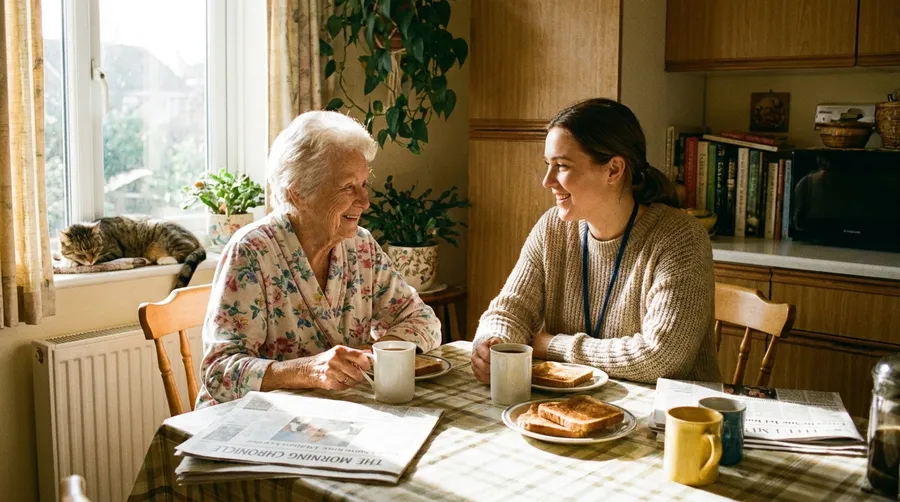
A companion is not a nurse or a cleaner. A companion is a regular, friendly presence who keeps your parent company and gives their day some shape. Depending on what your parent enjoys, a visit might include:
- conversation over a cup of tea, and time to talk about the old days
- cards, board games, puzzles or crosswords
- a walk around the block, a drive, a coffee out or a trip to the library
- help getting back to a hobby, such as gardening, knitting, music or photographs
- going with your parent to a seniors' centre, a place of worship or a family visit
- sharing a meal and keeping them company while they eat
- noticing small changes in mood, appetite or the home, and telling the family
For company and supervision we usually send a sitter. Sitters take on lighter duties and are CPR certified. We are insured and bonded, our caregivers are covered by WSIB, and we run Police Vulnerable Sector Checks.
Loneliness and Health in Older Adults
Loneliness is more than a mood. The Government of Canada's National Seniors Council estimates that about 30 per cent of Canadian seniors are at risk of becoming socially isolated. Its report links isolation to depression, poorer general health, more falls and an earlier death, and states that isolation can put seniors at greater risk of death than obesity or physical inactivity.
In practice, families see it in smaller ways. A parent who is isolated tends to eat less, move less and stop doing things they used to enjoy. Regular company can turn that around, because a visit gives them a reason to get dressed, tidy up, eat properly and go out. The Council on Aging of Ottawa is a local organization that works on issues affecting older adults, and its website is a good place to look for other programs and services in the city.
Companion Care vs Personal Care
The two are often confused, and the difference is simple. A companion visit is social and involves no physical help with the body. Personal care is hands-on: bathing, dressing, toileting and help moving safely. A companion visits for company, and a personal support worker (PSW) helps with the body.
Many families start with company and add personal care later, or use both. If your parent needs help with bathing or getting up from a chair, read about our personal care services in Ottawa. When you call, tell us what is going on, and we will suggest the right mix.

When a Parent Insists on Living Alone
It is one of the most common worries we hear: a parent who says they are fine, does not want a stranger in the house and refuses help. Forcing the issue usually makes it worse. A gentler approach tends to work better.
A Companion for Elderly Parents Who Say No to Help
- Start small. A couple of hours a week is an easier yes than a daily schedule.
- Frame it as company, not care. Many parents will accept a visitor, a walking partner or someone to play cards with, long before they accept help.
- Let them meet first. A short visit with the caregiver, with the family there, takes away much of the fear.
- Offer it as a trial. Agree to try it for a few weeks and then talk about how it went.
- Ask what they would enjoy. A companion who shares their interests is easier to welcome.
A few hours a week of company is often the compromise that lets a parent stay in their own home, with the family feeling less worried.
Matching the Right Companion
The right person matters more than the schedule. We take time to learn what your parent likes, how they speak, what they find annoying and what gets them talking, and then we look for a caregiver who suits them. Where we can, we introduce the caregiver before care begins, and we send the same person each time, so a visit feels like a friend calling in, not a different face every week.
If it does not click, tell us, and we will find a better match. Care can start with a few hours a week and grow if your parent wants more. We also provide care around the clock, so if needs change we can change with them.
Frequently Asked Questions
What is companion care for seniors?
Companion care is regular company for seniors at home. A caregiver visits for conversation, games, walks, outings and hobbies. It involves no physical help with the body and no medical care. It helps seniors who live alone or spend long hours by themselves, and it gives families peace of mind.
What is the difference between companion care and personal care?
Companion care is social: conversation, activities and outings, with no hands-on help. Personal care is physical: bathing, dressing, toileting and moving safely, provided by a personal support worker. Many families use both. We can suggest the right mix when we meet your parent and learn what help is needed.
How much does companion care cost in Ottawa?
Our rates run from $35 to $45 per hour, depending on the care and the hours booked. We confirm the exact price before care begins, so you know what to expect. Our home care cost guide explains rates, funding and tax credits in detail.
How often can a companion visit?
As often as you like. Many families start with one or two visits a week of a few hours. Others book daily visits. We provide care 24 hours a day, seven days a week. Tell us what your parent would enjoy, and we will suggest a schedule.
What if my parent refuses help?
Start small and frame it as company, not care. Offer a few hours a week, let your parent meet the caregiver first, and agree to try it for a few weeks. Many parents who say no to help are happy to say yes to a visitor.
Can a companion give medication or help with bathing?
No. Companion care involves no medical care and no physical help with the body. Our caregivers do not give medication. If your parent needs help with bathing, dressing or toileting, a personal support worker can provide it, and we can arrange that as well.
Give Your Parent Someone to Look Forward To
If your parent spends too much time alone, call us and tell us about them. We will listen, explain your options and, if companion care in Ottawa is the right fit, set up a visit to meet your family and plan the first visits.