Orleans, Ottawa · Serving Ottawa and up to 50 km around the cityOrleans, Ottawa
Mon to Fri, 9 AM to 5 PM(343) 644-3431

- Personal Care and PSW Support
- Companion Care
- Respite Care
- Dementia and Alzheimer's Care
- 24 Hour and Live-In Care
- Home Help, Meals and Transportation
- Orleans and East Ottawa
- Gloucester and South Ottawa
- Central Ottawa
- Nepean and Bells Corners
- Barrhaven and Manotick
- Kanata and Stittsville
- Rockland
- Embrun, Russell and Casselman
- Carleton Place, Almonte and Arnprior
- Kemptville, Winchester and Morrisburg
Ottawa Personal Care Services
Personal care services in Ottawa from 1st Home Health Care help seniors with the most private parts of the day: bathing, dressing, grooming, toileting and moving safely around the house. Our personal support workers (PSWs) come to your parent's home and give hands-on help with patience and respect for privacy, so your parent keeps as much independence as possible. This is non-medical care: we do not give medication, change dressings or do nursing procedures.
PSW Services in Ottawa
Most families come to us after something changes. A parent has had a fall, come home from hospital, or found the shower suddenly frightening. A spouse who has been helping for years is worn out. These are the moments when PSW services in Ottawa make the biggest difference, because a trained person steps in for the tasks that have become risky or embarrassing.
A personal support worker is a caregiver trained to help with the activities of daily living. Our PSWs are certified, and we are insured and bonded, our caregivers are covered by WSIB, and we run Police Vulnerable Sector Checks. We match each client with a caregiver who suits their personality, and we send the same person whenever we can, so help with something as personal as a bath comes from someone your parent knows.

What Personal Care Includes
Every plan is built around what your parent needs, and it can change as they do. Personal care can include:
- bathing, showering and bed baths
- dressing and undressing, including choosing clothes for the day
- grooming, such as hair, shaving and oral care
- toileting and continence care
- getting in and out of bed, a chair or the bath
- walking around the house and up and down the stairs
- help with meals, light housekeeping and laundry around the visit
Many families start with one or two visits a week and add more when they see how it goes.
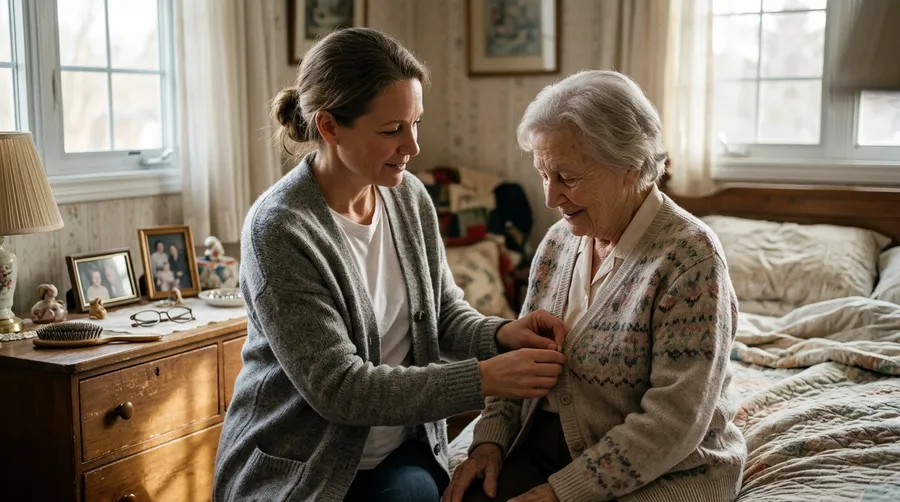
Bathing, Dressing and Grooming
Washing and dressing are where many seniors first lose confidence. Reaching, stepping over a tub edge and balancing on a wet floor all get harder with age, and the fear of a fall can lead people to wash less often.
Bathing and Dressing Assistance That Protects Dignity
Our caregivers follow your parent's own routine: bath or shower, time of day, water temperature, the soap they like. They keep your parent covered and in control as much as possible, talk through each step, and let your parent do whatever they can alone. Bathing and dressing assistance is meant to make your parent safer and more comfortable, not to take over. If a bathroom needs a grab bar, a shower seat or a raised toilet seat, we will tell you what we see at the home visit.
Mobility and Transfer Support
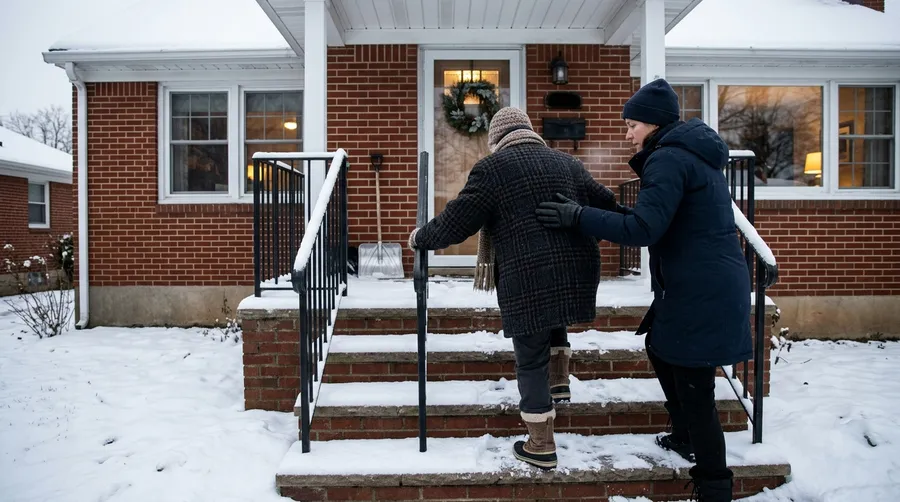
Many falls happen in the same few places: getting out of bed, standing up from a chair or the toilet, stepping into the shower and going up or down stairs. Our caregivers help with these moves. They steady your parent as they stand, walk beside them with a cane or walker, and help with the safest way to get in and out of the car.
In an Ottawa winter, icy steps and driveways add another risk. A caregiver at the door can make the difference between a safe trip to an appointment and a week stuck indoors. If your parent needs a mechanical lift or two people for a transfer, tell us at the first visit. We will tell you honestly whether we can help safely or whether another service is a better fit.
Toileting and Continence Care
This is often the hardest thing for a family to talk about, and the main reason people put off asking for help. Our caregivers deal with it calmly and privately, without making it an event. They help your parent get to the toilet, manage pads and briefs, clean up afterwards, and keep skin clean and dry. If your parent has accidents at night, we can also be in the home overnight.
What Does a Personal Support Worker Do
A personal support worker helps with the activities of daily living: bathing, dressing, grooming, toileting and mobility. Many also help with meals, laundry, light housekeeping and getting to appointments, because those jobs affect your parent's health as much as the personal care does.
A PSW is not a nurse. The job is to help your parent live safely at home, not to treat illness. A good PSW also notices change: a new bruise, a drop in appetite, a parent who seems more confused than last week. We ask our caregivers to tell the family when they see something.
Are PSWs Regulated in Ontario
Not in the way nurses are. Nurses in Ontario are regulated by the College of Nurses of Ontario. PSWs are not a regulated health profession, which means there has been no single body that checks every PSW.
That changed in part on December 1, 2024, when the Health and Supportive Care Providers Oversight Authority (HSCPOA) began registering PSWs. Registration is voluntary. HSCPOA keeps a public register that families can search at hscpoa.com to check whether a caregiver is registered. Whichever agency you choose, ask what training its PSWs have, how they are screened and who supervises them.
What a PSW Cannot Do
Our care is non-medical, and it helps to be clear about the line. Our caregivers do not give medication, give injections, change dressings, care for wounds or carry out any nursing procedure.
If your parent needs nursing care, Ontario Health atHome is the provincial agency that assesses people for publicly funded home care, including nursing. You can reach it at 1-833-515-1234. Many families use both: nursing visits arranged by the province, and our caregivers for the personal care between them.
Frequently Asked Questions
What is the difference between a PSW and a nurse?
A nurse is a regulated health professional who gives medical care, such as medication, wound care and assessments. A PSW helps with daily living: bathing, dressing, toileting, mobility and meals. Nurses are regulated by the College of Nurses of Ontario. PSWs are not a regulated profession.
What is the difference between home care and home health care?
Home care is non-medical support with daily living, such as personal care, meals and companionship. Home health care is clinical care from regulated professionals such as nurses. 1st Home Health Care provides non-medical home care, and Ontario Health atHome can arrange nursing visits if your parent needs them.
Can a PSW give my parent medication?
No. Our caregivers do not give medication, give injections or change dressings. If your parent needs medication given by someone else, a nurse or another regulated professional has to do it. Ontario Health atHome can assess whether your parent qualifies for nursing visits at home.
How much do personal care services cost in Ottawa?
Our rates run from $35 to $45 per hour. The exact price depends on the care your parent needs and the hours booked, and we confirm it before care begins. Our home care cost guide explains rates, funding and tax credits.
How often can a PSW visit?
As often as you need. Some families book one or two visits a week for bathing. Others need a visit every morning and evening, or someone overnight. We provide care 24 hours a day, seven days a week. Tell us what your parent needs, and we will suggest a schedule.
Are PSWs regulated in Ontario?
PSWs are not a regulated health profession. Since December 1, 2024, the Health and Supportive Care Providers Oversight Authority has run a voluntary registry of PSWs, with a public register families can search. It is worth asking any agency how it checks and trains its caregivers.
Talk to Us About Personal Care
If you are worried about your parent's safety in the bathroom or on the stairs, call us and tell us what is going on. We will listen, explain your options and, if personal care services in Ottawa are the right fit, set up a visit to meet your parent and plan the care together.