Orleans, Ottawa · Serving Ottawa and up to 50 km around the cityOrleans, Ottawa
Mon to Fri, 9 AM to 5 PM(343) 644-3431

- Personal Care and PSW Support
- Companion Care
- Respite Care
- Dementia and Alzheimer's Care
- 24 Hour and Live-In Care
- Home Help, Meals and Transportation
- Orleans and East Ottawa
- Gloucester and South Ottawa
- Central Ottawa
- Nepean and Bells Corners
- Barrhaven and Manotick
- Kanata and Stittsville
- Rockland
- Embrun, Russell and Casselman
- Carleton Place, Almonte and Arnprior
- Kemptville, Winchester and Morrisburg
Ottawa Dementia Care at Home
Dementia care at home in Ottawa helps a parent with memory loss stay in the house they know, with a steady routine and a familiar caregiver beside them. 1st Home Health Care supports seniors with dementia and Alzheimer's disease, and gives their families a break and some peace of mind. This is non-medical care: we do not give medication, change dressings or do nursing procedures. Our office is on Talcy Crescent in Orleans, and we provide care 24 hours a day.
Alzheimer's Home Care Ottawa Families Turn To
Most families do not look for help the day a parent is diagnosed. They look after a pot is left on the stove, a bill goes unpaid, or Mom calls at night asking where Dad is. If you are the son or daughter who has quietly become the carer, you are not alone. The Alzheimer Society of Canada reports that 771,939 Canadians were living with dementia in 2025, and it projects that number to reach 990,600 by 2030.
Staying at home is what most people with dementia want. Familiar rooms, smells and routines can be calming when memory is fading. Our caregivers come to the house, learn how your parent's day works, and help it keep going.
Memory Care at Home, Day by Day
A visit is built around your parent, not around a checklist. Depending on the day, a caregiver may:
- remind your parent to eat, drink and take a rest, and sit down to a meal together
- keep a familiar daily routine, so mornings and evenings feel predictable
- offer calm, hands-on help with washing, dressing and toileting through our personal care services
- go for walks, look through photographs, play music or do simple activities your parent enjoys
- stay close, so your parent is not alone and does not wander
- tell you what they noticed, such as changes in mood, appetite or sleep
Our personal support workers (PSWs) are PSW certified. Sitters take on lighter duties and are CPR certified. We are insured and bonded, our caregivers are covered by WSIB, and we run Police Vulnerable Sector Checks.
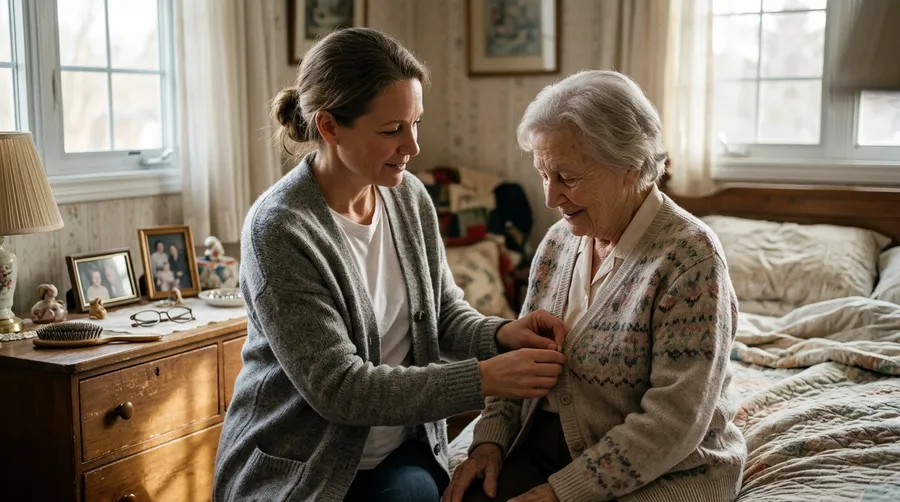

Early, Middle and Late Stage Support
Dementia changes over time, and so does the help a person needs. We start with what is needed now and adjust as things change.
- Early stage: Your parent is mostly independent but forgets appointments, repeats questions or struggles with the stove and the phone. A few hours a week of company, reminders and help with meals often keeps them safe and confident.
- Middle stage: Memory loss and confusion are more noticeable. Routines matter more, and help with bathing, dressing and meals is usually needed. Visits tend to be longer and more regular, and many families add evening care.
- Late stage: Your parent needs close, gentle help with most daily tasks. Many families move to overnight care or live-in care at this point, so someone is always in the house. We provide care around the clock.
Because we can scale up, you do not have to change companies as needs grow. Tell us what is happening now and we will suggest a plan.
Managing Wandering and Sundowning
Two things worry families most: a parent who leaves the house, and a parent who becomes agitated as the day ends.
Wandering is common, and it usually has a reason. Your parent may be looking for someone, trying to go home, or just restless. Sundowning is the confusion, anxiety or restlessness that some people with dementia feel in the late afternoon and evening. A caregiver can help with both:
- Keep a routine. Meals, walks and bedtime at the same hours reduce confusion.
- Plan the afternoon. A quiet activity, a snack or a short walk before the light fades often helps.
- Lower the noise. Turn on lamps early, close the curtains and keep the television off.
- Walk with them. If your parent wants to go out, a caregiver can walk with them, then bring them back gently.
- Stay close at night. Overnight care means someone is awake and in the house if your parent gets up.
The Alzheimer Society of Canada has more practical advice on wandering on its website, and its local office can talk through your situation.
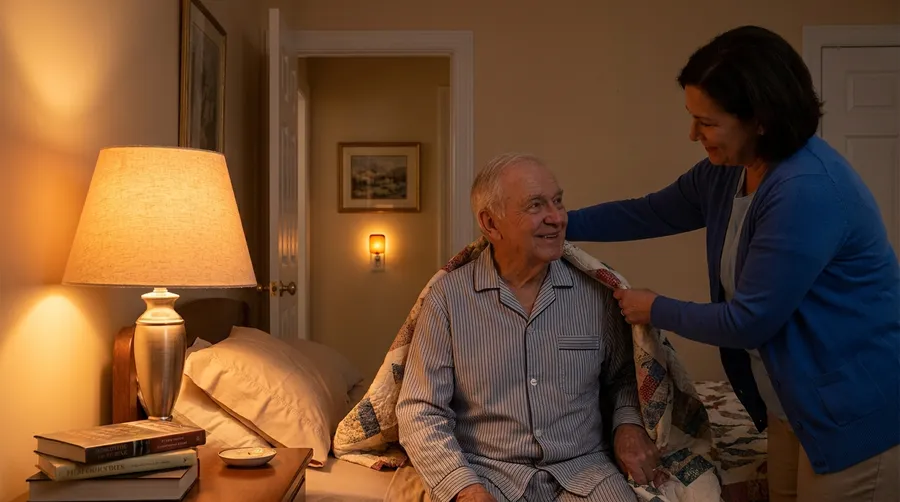
How to Communicate With a Person Who Has Dementia
How you speak matters as much as what you say. These habits help families and our caregivers alike:
- Approach from the front, say your name and smile.
- Use short, simple sentences, and ask one question at a time.
- Give choices that are easy to answer, such as "tea or juice?"
- Do not argue or correct. If your parent believes something that is not true, go along gently and change the subject.
- Allow time for answers, and do not finish their sentences.
- Use cues: a clock, a daily schedule board and labelled cupboards can reduce stress.
- Stay calm. Your parent often picks up on your tone before your words.
When a caregiver comes to the house, we share what works for your parent, so the same approach is used at every visit.
Keeping the Home Safe
A few changes can make a home safer for someone with memory loss. We can help you walk through the house and think about what to change.
- Clear walkways of loose rugs, cords and clutter, and add good lighting, especially at night.
- Put away or lock up knives, cleaning products and medications.
- Make the stove harder to use, or have a caregiver with your parent when it is in use.
- Keep a list of emergency numbers by the phone.
- Put reminder boards, a large clock and a calendar in a place your parent will see them.
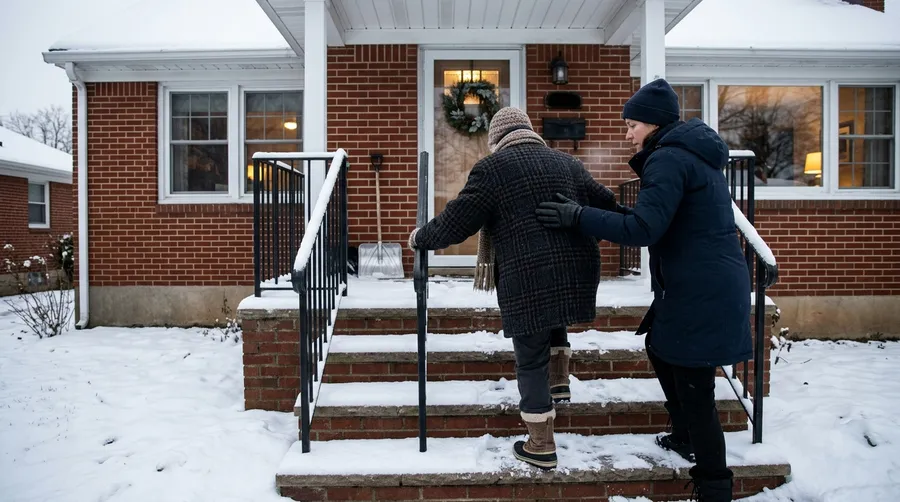
- Make winter safer: clear steps and paths of ice and snow, as many Ottawa homes have outdoor stairs.
- Think about a door chime or alarm if your parent has started to wander.
Respite for Dementia Caregivers
Caring for someone with dementia is demanding, and family caregivers often run out of energy before they run out of love. Taking a break is not selfish. It is how you keep going.
A caregiver can stay with your parent for a few hours so you can sleep, shop or see a friend. They can also give you a full day, a weekend or a longer break if you are ill or travelling. Read more about our respite care in Ottawa, and call if you need help quickly.
Working With the Alzheimer Society of Ottawa
We are not a substitute for the local dementia organizations, and we encourage families to use both. The Alzheimer Society of Ottawa and Renfrew County offers support, education and programs for people living with dementia and their caregivers, and it can connect you through its First Link® program. You can reach the Alzheimer Society of Ottawa and Renfrew County at 343-630-1841.
Ontario Health atHome also arranges publicly funded home care for eligible people, which you can reach at 1-833-515-1234. We work with both private-pay clients and clients funded through Ontario Health atHome. Our home care cost guide explains our rates and what funding may be available.
Frequently Asked Questions
Do you provide home care for people with dementia in Ottawa?
Yes. We provide non-medical home care for seniors with dementia and Alzheimer's disease in Ottawa. Caregivers help with routines, meals, personal care, company and supervision, and give families a break. We do not give medication or nursing care. Call (343) 644-3431 to talk about your parent.
Can you provide overnight care for someone with dementia?
Yes. We provide care 24 hours a day, including overnight and live-in care. Overnight care helps when a parent is awake at night, restless or at risk of wandering. Many families add it as dementia progresses. Tell us what your nights look like and we will suggest a schedule.
What is the difference between dementia and Alzheimer's disease?
Dementia is a general term for symptoms that affect memory, thinking and daily life. Alzheimer's disease is the most common cause of dementia. The care at home is similar: routine, patience, supervision and help with daily tasks. A doctor can explain the diagnosis, and we support the day-to-day care.
How much does dementia care at home cost in Ottawa?
Our rates run from $35 to $45 per hour, depending on the care and the hours booked. We confirm the exact price before care begins. Our home care cost guide explains rates, funding and tax credits in detail, including how Ontario Health atHome fits in.
How do I know when it is time to get help?
Common signs are missed meals, unpaid bills, wandering, falls, weight loss, a messy or unsafe house, or you feeling exhausted. You do not have to wait for a crisis. Starting with a few hours a week is often easier for your parent and for you.
Can a caregiver help if my parent resists care?
Often, yes. People with dementia may refuse help from strangers, so we introduce the caregiver slowly, send the same person each time and let your parent lead. Small steps such as a walk or a cup of tea build trust before personal care begins.
Give Your Parent Calm Days at Home
If your parent is living with memory loss and you are looking for dementia care at home in Ottawa, call (343) 644-3431 or send us a message. Tell us what is happening, and we will talk about what help might look like.